The Revenue Code: Start Here to Get More Members, Part 4 of 5
Your best new member is not who most gyms expect. BETA's data shows young adults convert in fewer visits and stay longer. Here is how to target them and grow membership revenue.
Welcome back to our Revenue Code series! Last week’s post got into the benefits of focusing on membership as a primary revenue stream. This week we’ll talk about who to focus on for the best results!
You have multiple levers you can adjust to increase your membership revenue: You can increase the number of new members joining, decrease the number of members churning, or increase the amount members pay you each month. We'll focus on the first two.
If you’re interested in some background and methods, check out our introduction post.
Written by Miura Hawkins
CEO & Founder at BETA climbing
► Which lever are you pulling hardest right now: new members, fewer cancellations, or price?
1 / Retaining Existing Members
Decreasing churn, or increasing retention, is one of your best options when looking to grow your revenue from membership. Decreasing churn means you have a product that customers feel is worth the monthly price. They enjoyed this month as a member so much that they want to come back next month.
As gym owners we often have a feeling for the retention trends we see across different age groups, but we decided to take a look at what the numbers say about age and retention.

► Before you read on:
Which age group do you think cancels the most at your gym?
In the analyzed cohort, the lowest retention rates were around the ages of 17 to 22. This unmistakeable dip is actually preceded by the highest retention rate at age 16. And after the early 20's, the retention rate quickly climbs again and remains steady throughout adulthood.
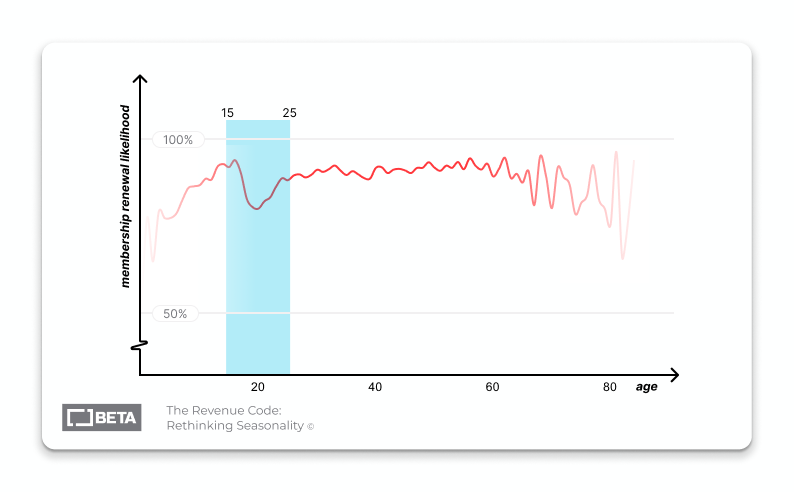
► How we interpret this data....
You might see this chart and think that you should focus on keeping your 17-year-old members engaged – bridge the gap of the late teens to make a long consistent retention line. But we have a different take: If you've been 17 years old before, you might agree that the idea of trying to sway the behavior a 17-year-old seems kind of futile. Instead, to me these data show that the absolute best group to focus on getting into your membership is those just emerging from the slump. These young adults are highly likely to renew their membership for many months to come, and in fact many people in this age range are looking for new experiences and new friends, and might just find in climbing a hobby that's going to last them the rest of their lives.
So rather than fighting the dip, you should lean into it, acknowledge that older teens will leave you, and focus your marketing efforts on attracting the types of members who are more likely to stay, therefore increasing your retention and your bottom line in the membership category.
► Do you know the average age of your members today, and who you are attracting?
In fact, when we looked at overall retention rate per location compared to average member age, we saw optimum retention rates when the average member age was around 31, indicating that a strong focus on youth doesn't lead to a high overall retention rate.
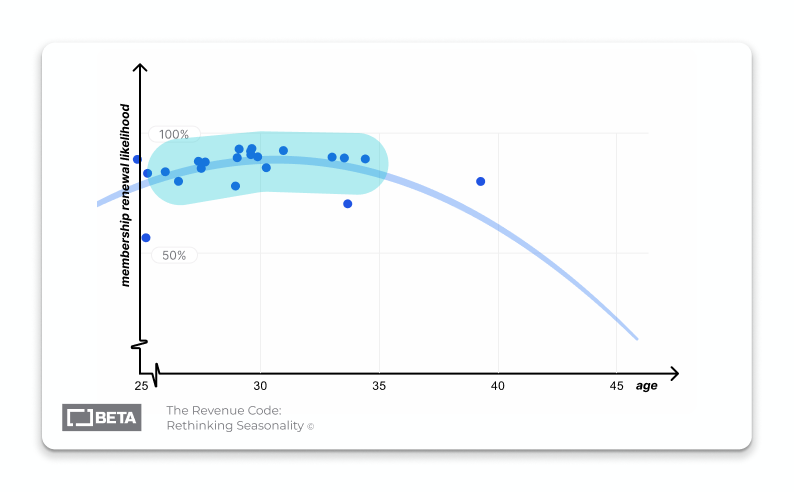
► How many of the kids who joined your youth program three years ago are still climbing with you?
Having a strong youth program can be extremely beneficial for attracting families and bringing in climbers who are highly likely to renew for a few years, however having a stronger focus on young adults means that you don't have a wall of drop-off awaiting those new members a couple of years after they start – your expected lifetime value of a new 23-year-old member is much higher than that of a 12-year-old.
2 / Attracting New Members
There's one other reason why these 23-year-olds are the optimal people to target for new memberships: conversion velocity. We used a machine learning algorithm called K-means to classify new members into groups of similar behavior and we found some striking patterns.
They tended to require fewer visits before taking up membership and tended to convert to membership in a shorter time window from their first ever visit to the facility.
Older adults were the hardest to convert, with some older groups requiring an average of 7 or 8 visits before becoming members. Youngsters tended to fall between the two groups.
► How many visits does it usually take before someone joins at your gym?
Get BETA, this data point is very important for your retention.
In short, we found hard data to back up our suspicion that these young adults are looking for their new hobby and once they try climbing, they decide quickly if it's a good match. This means that you spend less money trying to convince them to join. Couple that with the fact that they stay on longer and you have your perfect new member.
One last thing worth mentioning is that we found that facilities with an average event attendance age over 18 tended to have higher retention than those with an average event attendance age below 18. This again backs up the claim that focusing on getting adults into climbing pays dividends when looking at your longer-term membership revenue.
⤷ Putting It All Together
So how do you turn this into action?
Next time you build a marketing campaign, ask yourself with whom the messaging is meant to resonate. If the answer doesn't include people in this ideal demographic, consider adjusting the tone or channels.
► Who was your last campaign written for?
Make sure you have events and front-desk scripts built around showing young adults what life could be like as a member at your gym. These people are hungry for adventure so serve it up!
What the data says
Target young adults (about 22 to 25) for membership. They are the best mix of cheap to convert and slow to churn.
Next week in our final Revenue Code series post, we'll continue on the theme of analyzing membership and what keeps people around in what I think is the most interesting finding of the study. We'll be talking about everyone's favorite topic: community. Stay tuned!
Want to see what this looks like for your gym?
Book a demo and we will walk you through BETA, built by climbers for climbing gyms.
Book a DemoWritten by Miura Hawkins
CEO & Founder at BETA climbing
Part of The Revenue Code Series